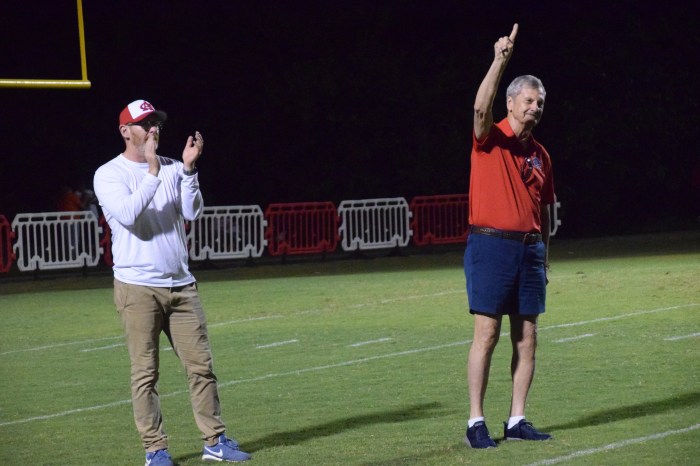
More than 60 years after his stellar career at Anderson High School ended, Rody Cloyd reflects on a blessed career in football and education
By John Herndon, 110forChrist.com
LAWRENCEBURG – The memories are vivid 60 years later. The lessons about football and life remain clear.
And Rod Cloyd can look back on a life that brought football, faith, education and a never-say-die attitude together in a career that made him a highly respected sports figure around Kentucky.
It all began as a 12-year-old Boy Scout in his hometown of Lawrenceburg, ushering University of Kentucky football games at Stoll Field/McLean Stadium. At Anderson County High School, Cloyd became one of the top quarterbacks in central Kentucky, leading the Bearcats to 24 wins in 27 varsity games. He would go on to play four seasons at UK, starting the last two years.
Cloyd’s exploits as a Bearcat earned a place in the Anderson County Athletic Hall of Fame’s Class of 2026. “Once a Bearcat, always a Bearcat,” he says with a smile.
Rod still cringes when talking about a game against Shelbyville in 1964, his senior campaign. Both teams came into the game unbeaten, with the winner taking the Class A district championship.
Trailing 13-7, Anderson was driving for what could have been the winning touchdown.
“Glenn Moffett was one of my ends and he came back to the huddle to tell me he could get open at any time,” Cloyd remembers.
The Bearcats called Moffett’s number. Cloyd connected with his teammate for a short pass that ended with Moffet racing to the end zone. But a yellow flag was on the field.
“They called clipping on the right guard,” Cloyd said with the disgust in his voice still evident 62 years later. “That was the incorrect call, according to the rules.
“I was upset. I came off the field saying I was never going to set foot in Shelbyville again!”
But Cloyd chuckles at how he wound up at Kentucky, choosing to play for Coach Charlie Bradshaw over scholarship offers from Vanderbilt and West Point. There was no social media and there were few, if any, nationwide recruiting services like today.
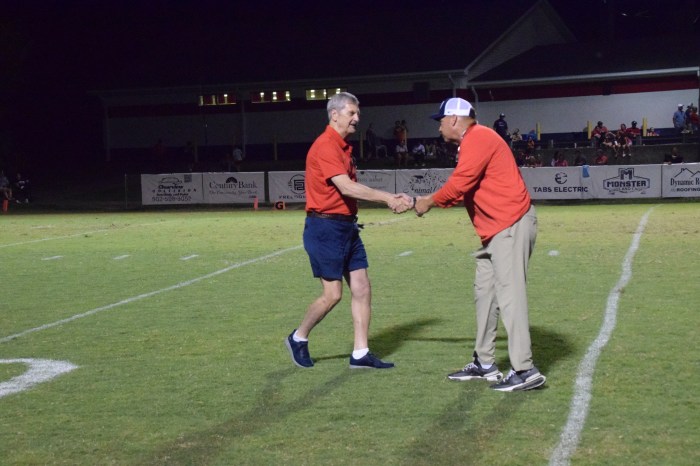
“It was word of mouth,” Cloyd remembers. “At that point, high schools didn’t even have film and cameras. To this day, I don’t know what I looked like playing, except at UK, of course. The colleges would send out coaches (to scout), but most of it was a network. Every school in Kentucky – UK, U of L, Western, Eastern – they would all have their connections with (high school) coaches. So what they would do is during the season, they would call the coaches.”
Cloyd says a college friendship between coaches led to his arrival at Kentucky.
“Duke Owens was at Mt. Sterling and he was a great football coach. And it turned out that he was a roommate of (Anderson coach) Buzz Frazier in college. And, of course, Buzz was my coach. So he called Duke Owens and said, ‘I have a kid named Cloyd who can play.”
Owens told the Wildcat coaches, leading to a college career more memorable for what actually happened than the wins and losses. During Cloyd’s varsity career, UK went 8-21-1 with the only win over a ranked team coming in 1968, his senior year, over No. 20 Oregon State.
But Cloyd learned much about himself, his teammates and human behavior when Kentucky signed African-American players Nate Northington and Greg Page, the first Black athletes on scholarship at any Southeastern Conference school. Times were different but Cloyd befriended the two immediately. While he was a student, Anderson High School had integrated. “I was one of the few (on the UK team) who had played with Black kids,” Cloyd says, “and I was a big brother to them.
Northington and Page played through their freshman season, but before the 1967 season, Page suffered a broken neck in practice. He died 38 days later. Northington would eventually transfer to Western Kentucky but while at UK, his roommate on the road was the junior defensive back from Lawrenceburg.
But the team had heard of threats against Cloyd’s teammate when they went on the road in the SEC. “Our first game was at Auburn. People say they were calling us names but that didn’t happen. They treated us well.”
A year behind Northington were two more Black athletes, Houston Hogg and Wilbur Hackett. Hackett, who would become an All-SEC linebacker. “He was my second little brother,” Cloyd said of Hackett.. “He was a great player and became a great (SEC) official.”
While the wins were few and times were changing, playing for Bradshaw might have been the toughest test of Cloyd’s time at UK. A former Marine drill instructor, Bradshaw was already known for his “Thin Thirty” team of 1962, his first season. By the end of the season, so many players had quit, only 30 remained.
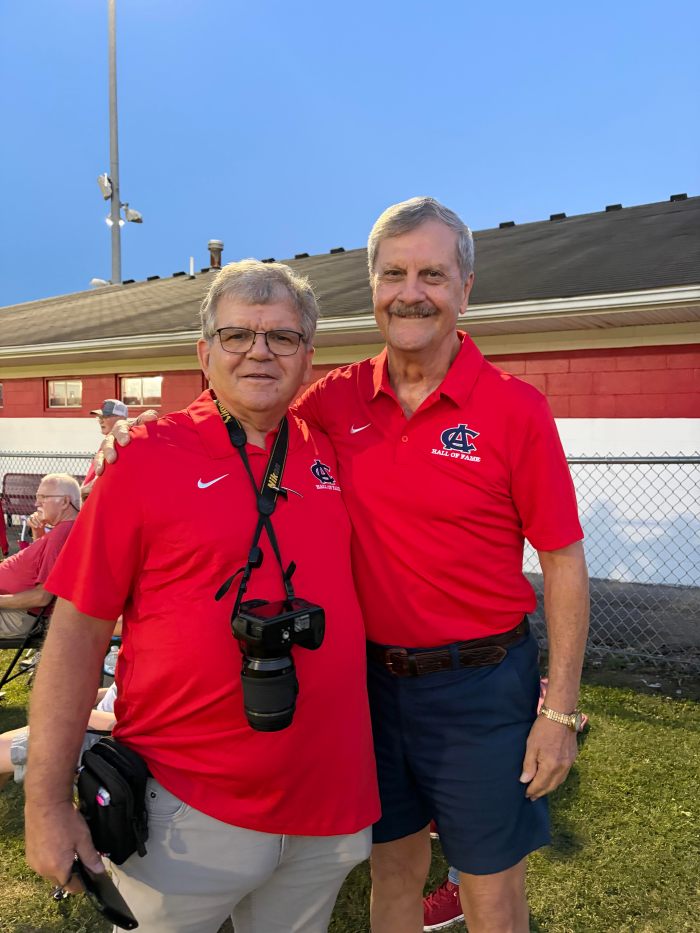
Cloyd said that wasn’t going to happen. “I wasn’t going to quit. They would have to kick me off and throw me off. … My signing class, we had 34 players with four-year full rides. By the time we graduated, there were seven. That was the attrition rate.”
Yet Rod Cloyd built on his experiences to become a successful assistant football coach at Atherton High School in Louisville and spend 20 years as athletic director at Shelby County High School.
Ironically, during much of his time at Shelby, the Rockets’ biggest rival in most sports was Cloyd’s alma mater, Anderson County. “I think we played once in football but we were in different divisions, different classes.”
But in other sports? “There was tremendous respect on both sides. There was familiarity. We were in the same district so we would play every year at least two or three times.”
Yet Cloyd credits his upbringing for laying the foundation of hard work, academic and athletic excellence and serving others. “I was very active at (Lawrenceburg’s) First Christian Church,” he says. “I have been very blessed.”


